
Design programmes that survive scrutiny
We build programme architecture around measurable targets rather than activity counts, scoped to the standards funders, regulators and boards already report against.
Torchbearer designs, delivers and verifies climate and social programmes in the environments that are hardest to reach, and reports outcomes institutions can put their name to.

Climate change reaches the least-resourced first. Delivery decides who it reaches next
We build programme architecture around measurable targets rather than activity counts, scoped to the standards funders, regulators and boards already report against.
Flood-exposed districts, under-served schools, communities sitting outside formal service networks. We work through local partners and go where the need is, not where the logistics are easy.
Baseline, endline and an evidence trail that holds up to an auditor. If an outcome cannot be measured, we say so before a programme starts, not after it closes.

Alignment
Every programme we design is tied to named SDG targets and to the national agendas our partners are already accountable to, the same indicators, the same language, the same standard of evidence.
Target 6.2

Field notes, method papers and data from our programmes, and from the systems those programmes have to work inside.
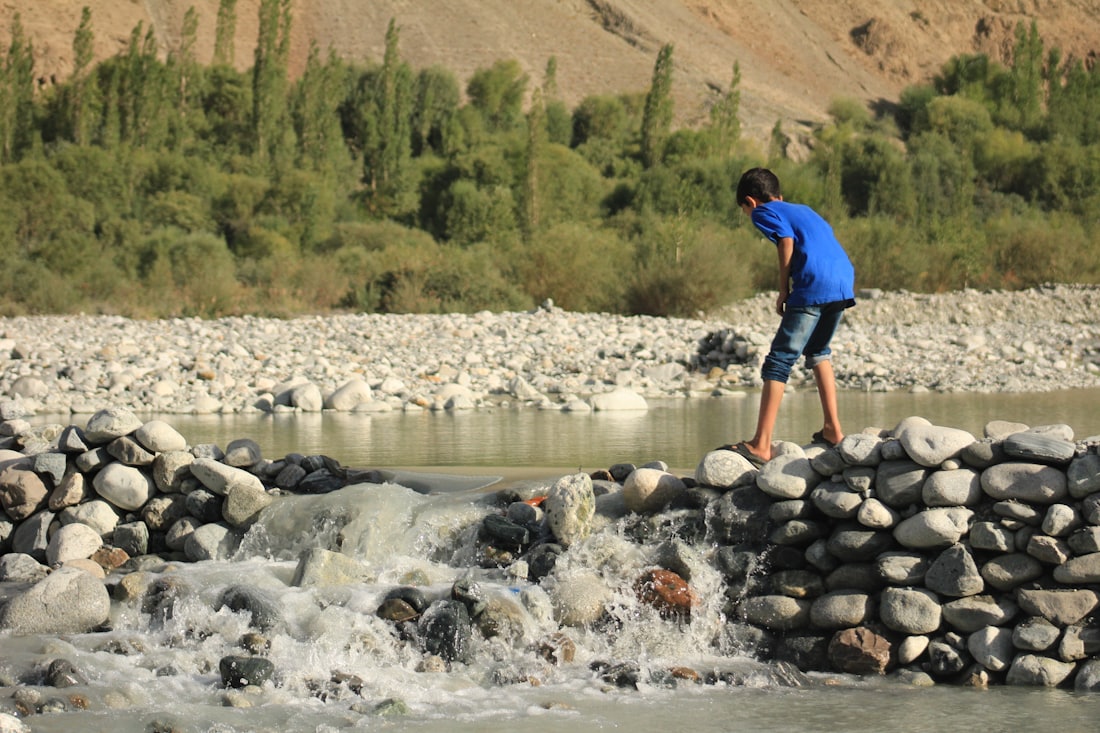
The first five photographs are our own sessions in Pakistan, published with the consent of the people in them. The landscape images that follow are representative.



We start by establishing what is actually true. Who is affected, how many, and what has already been tried in the same district by someone else. Most failed programmes fail here. They are designed against an assumption rather than a baseline.
Scope closes with a written problem statement and an explicit list of what we will not be able to measure.
Programme architecture is written against named targets, the SDG indicators and national frameworks a partner already reports into, so that results arrive in a format the partner can use without translation.
Every design carries a safeguarding plan, a data-protection position and a stated cost per outcome before a single unit is procured.
Delivery runs through local organisations and locally recruited teams. This is a deliberate constraint, not a cost measure: programmes that depend on outside staff stop working the moment the outside staff leave.
Distribution alone is never the intervention. Product and education are delivered together, or the outcome does not hold.
Baseline at intake, endline at a fixed interval, on the same instrument, with the same population. Where a control group is feasible, we use one. Where it is not, we say so in the reporting rather than implying a counterfactual we did not test.
Attrition is reported as a number, not absorbed into the result.
The evidence trail is assembled so that a third party can reconstruct the result without speaking to us: raw instruments, method notes, exclusions, and the reasoning behind every adjustment.
This is the stage most implementers skip. It is the one that makes a result usable in a disclosure, an audit or a board paper.

Problem definition, theory of change, indicator sets and cost-per-outcome modelling, written against the frameworks a partner already reports into.
Execution through local partners in hard-to-reach districts: procurement, logistics, training, community engagement and safeguarding.

Baseline and endline instruments, data governance, independent verification, and reporting built for audit and disclosure use.

Framework design, indicator architecture and delivery-capability building for institutions running their own social and environmental programmes.

Independent review of programmes already running: what is working, what the data actually supports, and what should stop.
“Charity does not scale to meet a climate problem. Delivery capability does.”



 Partner
 Our
Our


